
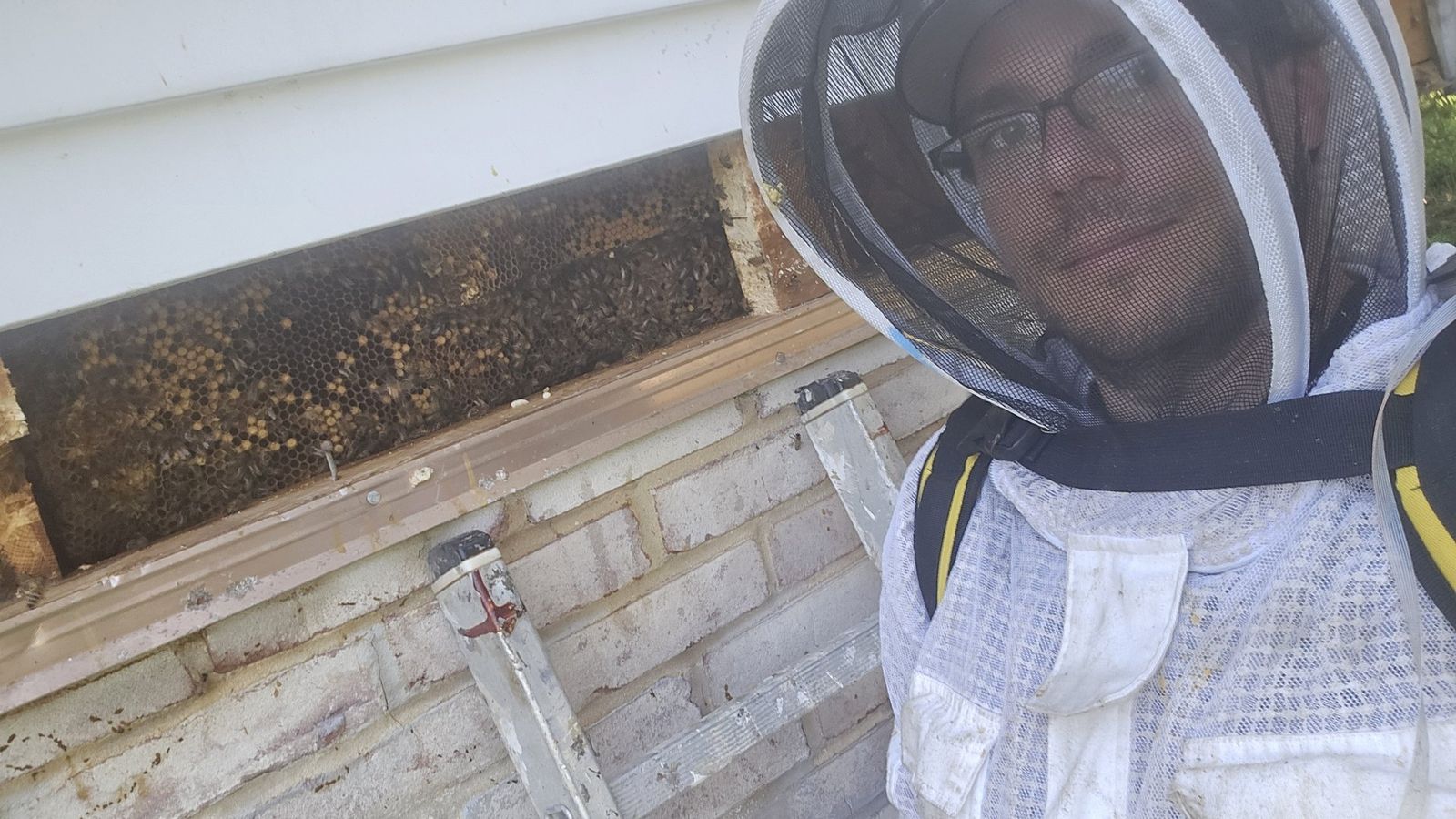
Every job runs in two visits. The first is a free on-site assessment. The second is the actual removal, scheduled separately once you've signed off on the price.
Visit 1 · Free
Assessment
We come on-site to find the colony, see how big it is, and figure out the cleanest way to extract them alive. Our main tool is a FLIR thermal camera — honeybees keep the brood nest at 95°F year-round, so the colony lights up on thermal even through drywall, plaster, siding, or stone. If thermal isn't conclusive on dense materials, we use a borescope through a small pilot hole to confirm.
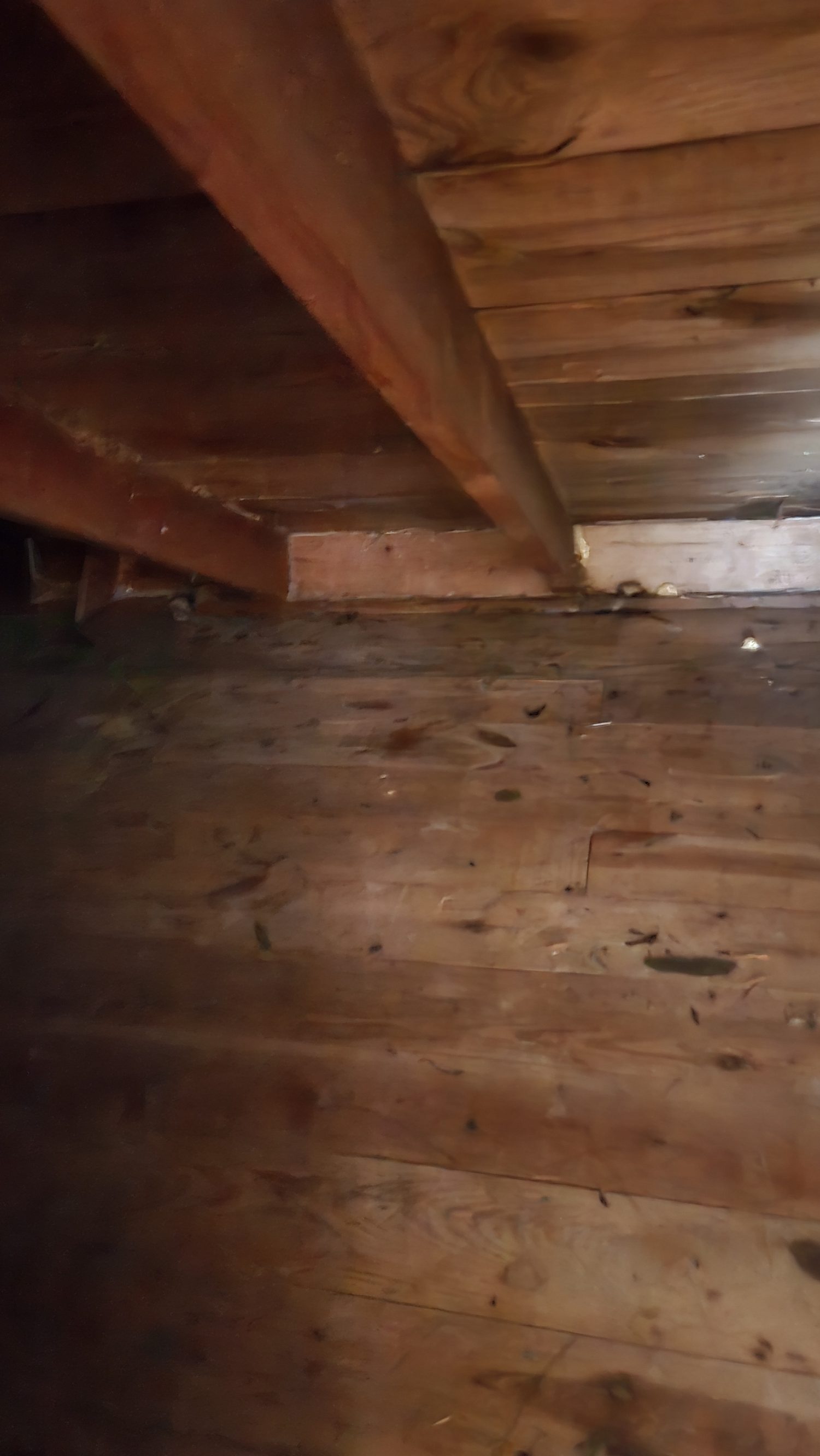
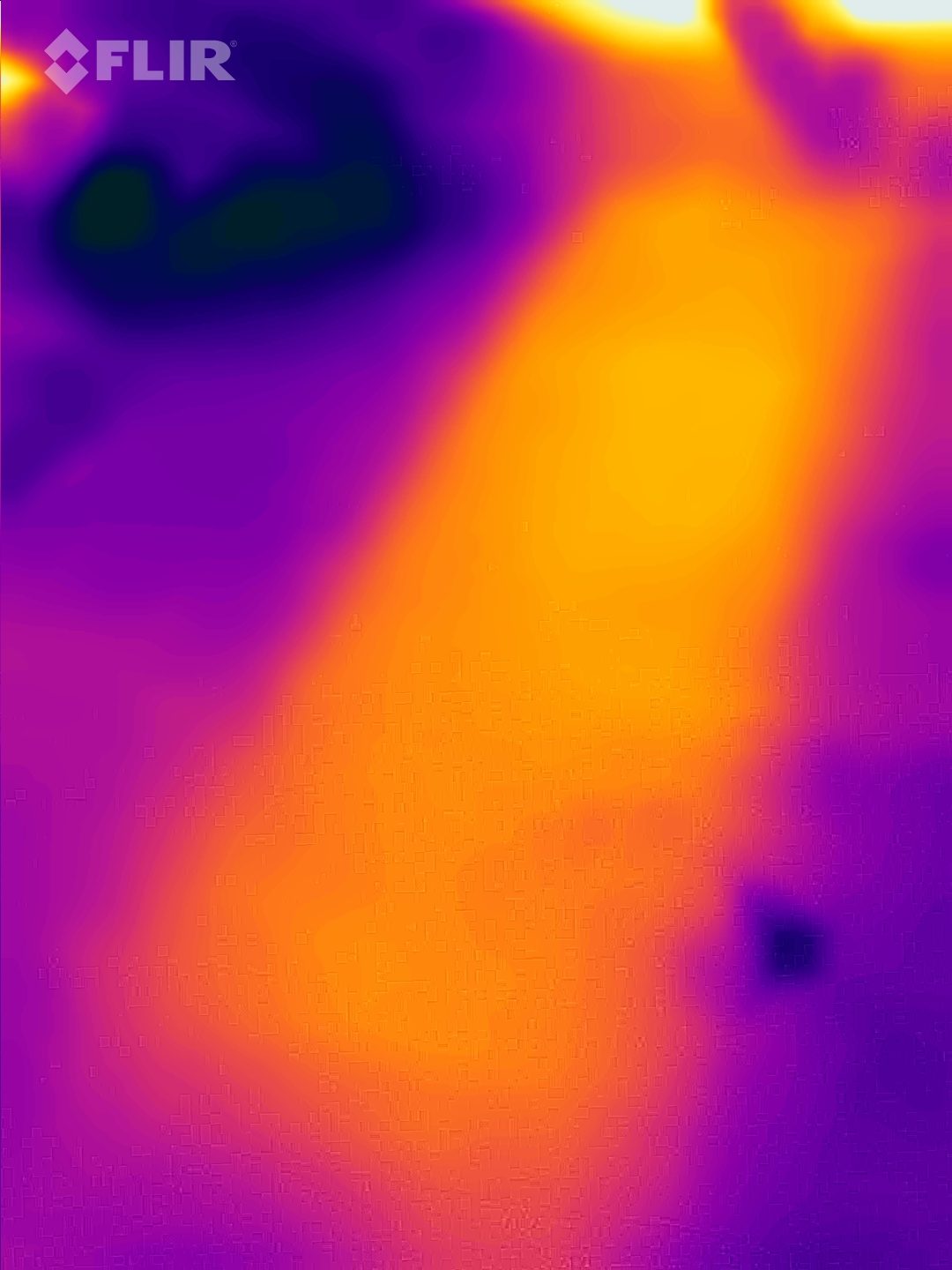
Once we know what we're dealing with, we tell you exactly what we'd do, how long it'll take, and what it'll cost. The colony goes home with us to one of our apiaries in Hummelstown — we don't exterminate, we rehome. Final price at the end of this visit — no deposit, no upsell, no contract. You decide whether to schedule the removal.
Pricing depends on what it takes to physically reach the colony:
| Difficulty | Price |
|---|---|
| Standard (stool or stepladder) | $650 |
| Moderate (ladders or scaffolding) | $750 – $1,000 |
| Complex (bucket lifts) | $1,200 and up* |
*Lower if the homeowner has their own bucket lift.
Visit 2 · Scheduled separately
Removal
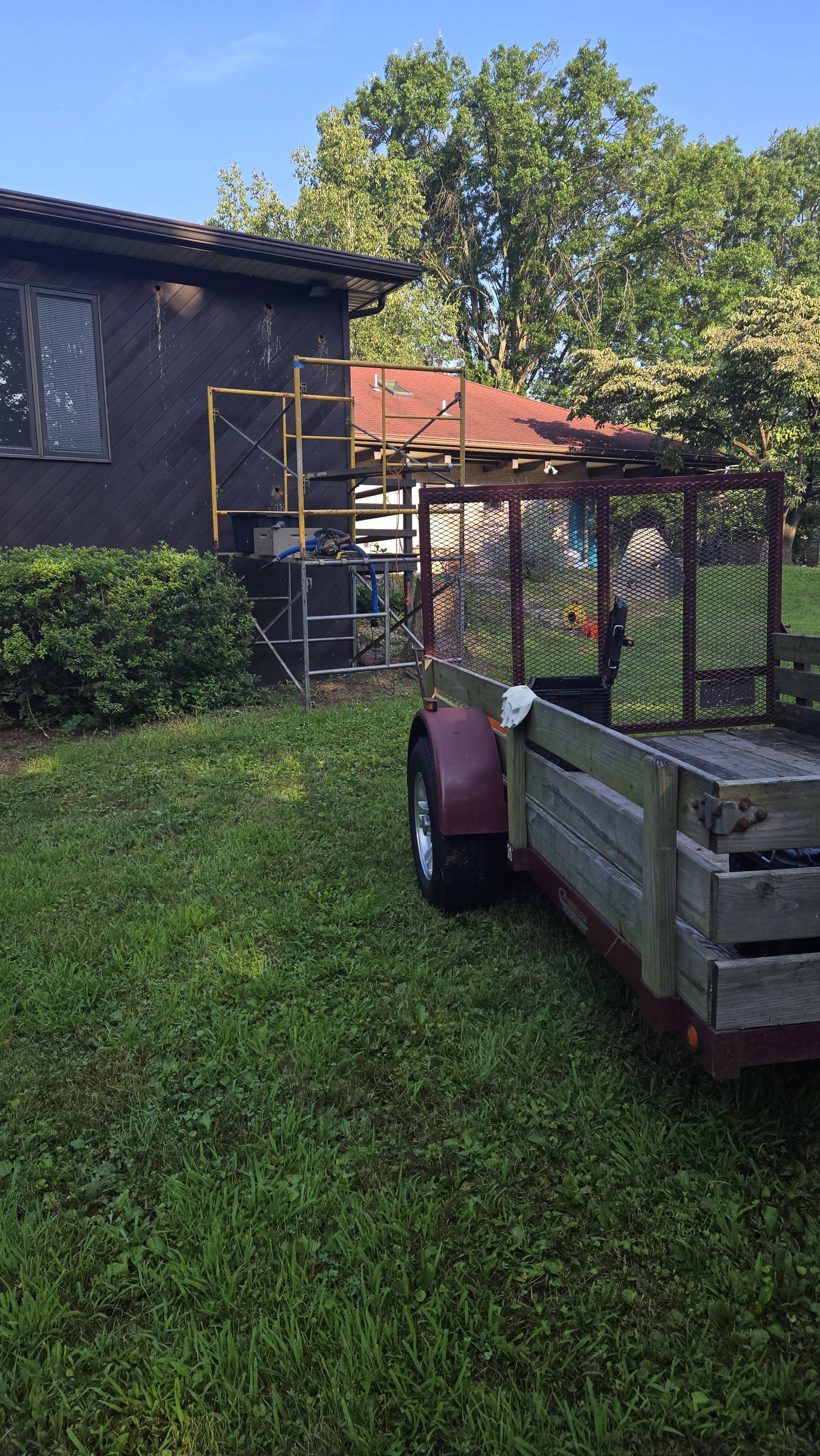
Where the colony lives shapes how we get to it. Most jobs fall into one of these scenarios:
Bees in a wall
Most common scenario. Honeybees enter through a small gap in trim, siding, or weep holes and build comb between studs. We open the wall (interior or exterior, whichever's easier), extract the bees, comb, and queen, and seal the cavity before we leave.
Bees in an attic or soffit
Common in older homes with gable vents or cracked soffits. Attic colonies can grow huge because of the open space. We work from inside where possible and seal the access points to prevent re-entry.
Bees in a chimney
The trickiest. Comb hangs deep in masonry; access usually means roof work and sometimes a bucket lift. Don't light a fire to flush them — it kills the colony and leaves a wax mess in the flue.
Trees, sheds, eaves, and outbuildings get the same approach. We use a purpose-built bee vacuum to capture the bees alive, save as much brood comb as is structurally accessible (rubber-banded back into frames for the new hive), and seal the cavity exterior before we leave. The colony rides home with us to one of our apiaries in Hummelstown the same day.
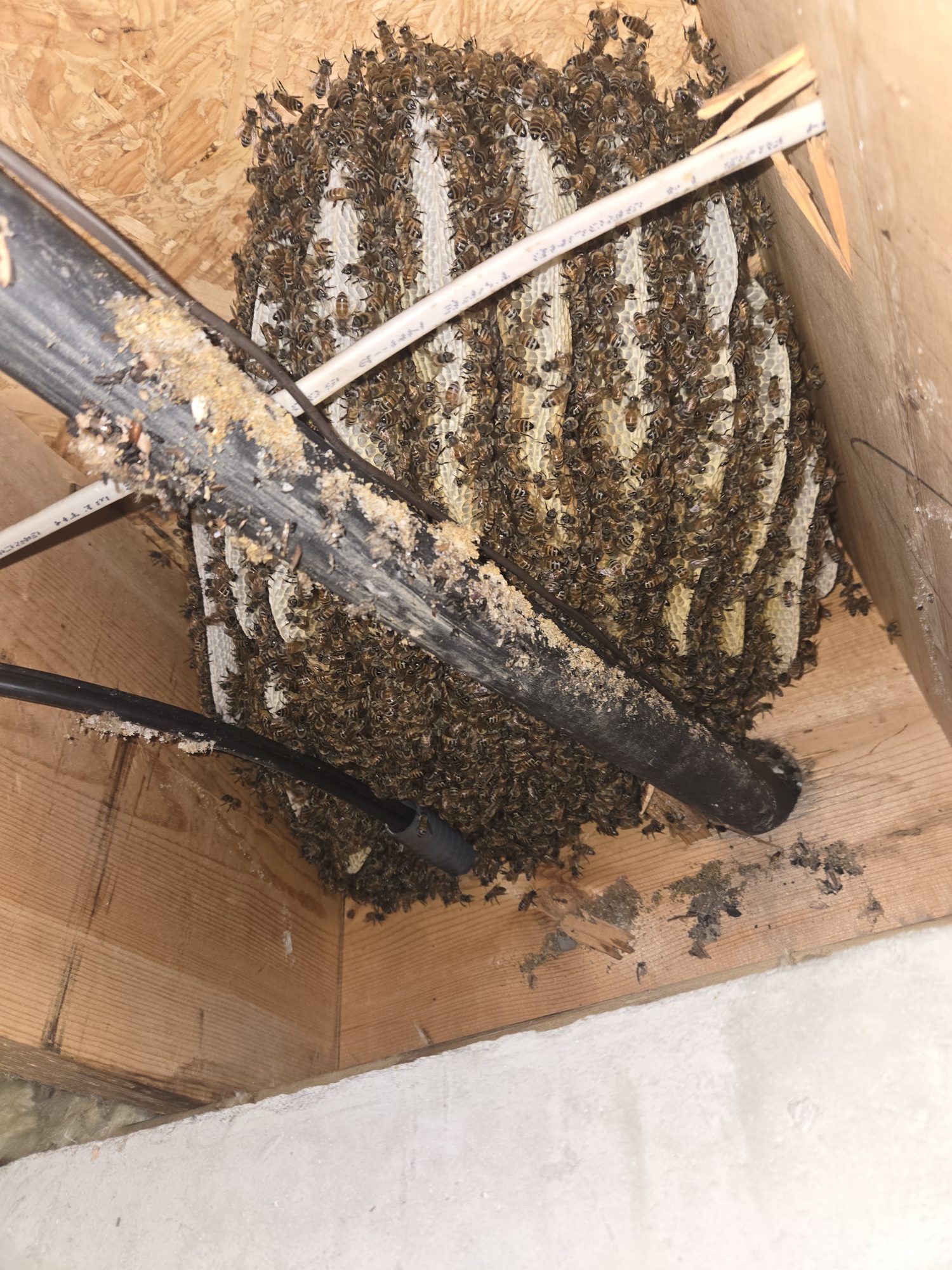
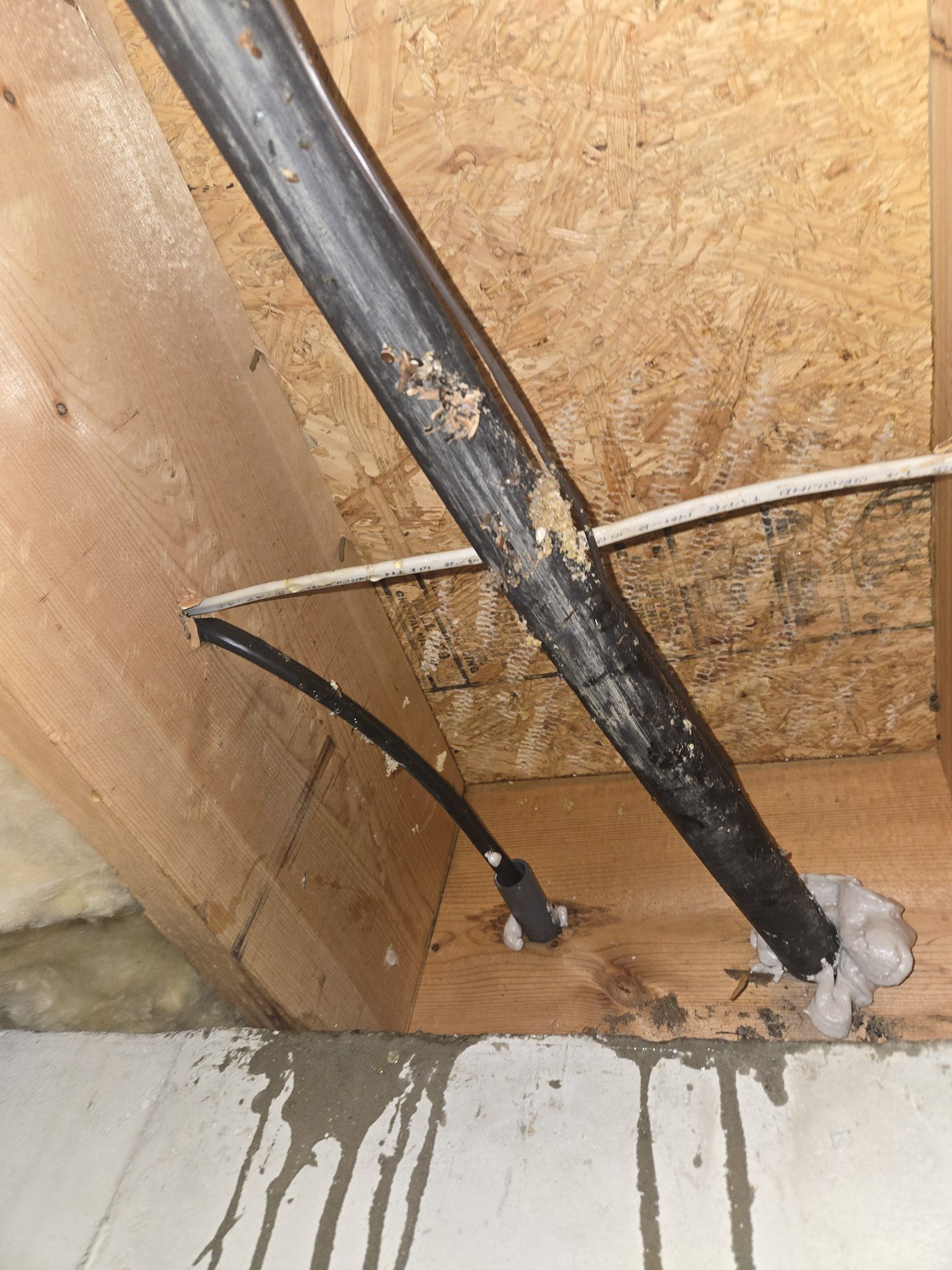
After the Removal
Before we leave, we seal the cavity exterior with screen and sealant, and cover any interior opening with heavy plastic sheeting so your home is weatherproof. From there, the wall, soffit, or roof patch is yours to arrange.
We're beekeepers, not contractors — we don't carry a construction license, so we don't do drywall, siding, or roofing repairs. Most homeowners hire a handyman after the job; the typical patch-and-paint runs a few hundred dollars depending on what was opened up. If you don't have someone, we can sometimes recommend a contractor we've worked with.
Why Pest Control Companies Refer Honeybees to Us
If you've already called Ehrlich, Fox, Terminix, Orkin, or one of the other big pest control companies in the area, you've probably heard the same answer: "We don't do honeybees — call a beekeeper." That isn't a brush-off. It's the right call, and the reason is more practical than people realize.
Killing a colony in a wall doesn't make the colony go away. It makes it rot in place. A typical wall colony contains 10 to 60 pounds of honey-laden comb maintained by the bees that built it. The minute those bees are dead:
- The honey starts to drip. Without bees keeping the wax cells capped and the cavity temperature stable, comb softens and honey leaks. It runs down studs, soaks insulation, drips out of light fixtures and electrical outlets, stains drywall, and on a hot day can pour through a ceiling.
- The comb decomposes. Wax moths, hive beetles, ants, and bacterial decay take over abandoned comb within weeks. Fermenting honey plus decaying brood produces a sickly-sweet rot smell that carries through the wall.
- It becomes a pest magnet. A decaying mass of honey and dead bees draws ants, cockroaches, mice, rats, and yellow-jackets — none of which the pest tech who killed the colony has a contract to come back for.
- Mold and structural damage follow. Honey is hygroscopic — it pulls moisture out of the air. Once it's soaking insulation and drywall, you've got the ingredients for mold and rot in the cavity.
- There's a real chance of recurrence. Honeybees often move into old abandoned hive cavities — leftover comb and pheromones signal a viable home to scout bees from the next year's swarms. So a kill that doesn't fully clear the cavity can become next spring's bee call in the same wall.
Live removal solves all of that in one visit. We extract the colony, the queen, and as much comb as is structurally accessible. The cavity gets sealed so ants, mice, and the next swarm don't move in. The bees go home with us to one of our apiaries in Hummelstown.
The equipment and insurance gap. Live extraction has more in common with carpentry than chemistry. Opening a wall to reach a colony takes drywall saws, oscillating multi-tools, pry bars for soffits, plus a bee vac, thermal imaging, and the experience to find a queen in a hidden cavity. None of that is in a pest tech's truck. Their insurance may not cover structural work either — pest control policies are generally written around chemical application, not opening walls. Our coverage is built for it, because cutting and re-sealing wall cavities is a normal part of our work.
There's also a professional-norm side: most pest techs treat honeybees as a beneficial species and won't kill them when relocation is available. But the practical mess is the bigger reason. They know what a poisoned hive does to a house, and they don't want to be the company that did it.
For the wasps, hornets, yellow-jackets, and carpenter bees the pest companies do handle — we send those to our trusted partner Lawns Plants & Pests LLC in Harrisburg. Different specialist, different tools, same idea: get you to the right person on the first call.
Frequently Asked Questions
How quickly can you respond?
We try to respond to every inquiry the same day. For non-urgent removals, we typically schedule a free on-site estimate within a few days. Active swarms get priority because they don't stay put for long — if you're looking at one right now, call or text immediately.
What happens to the bees after you remove them?
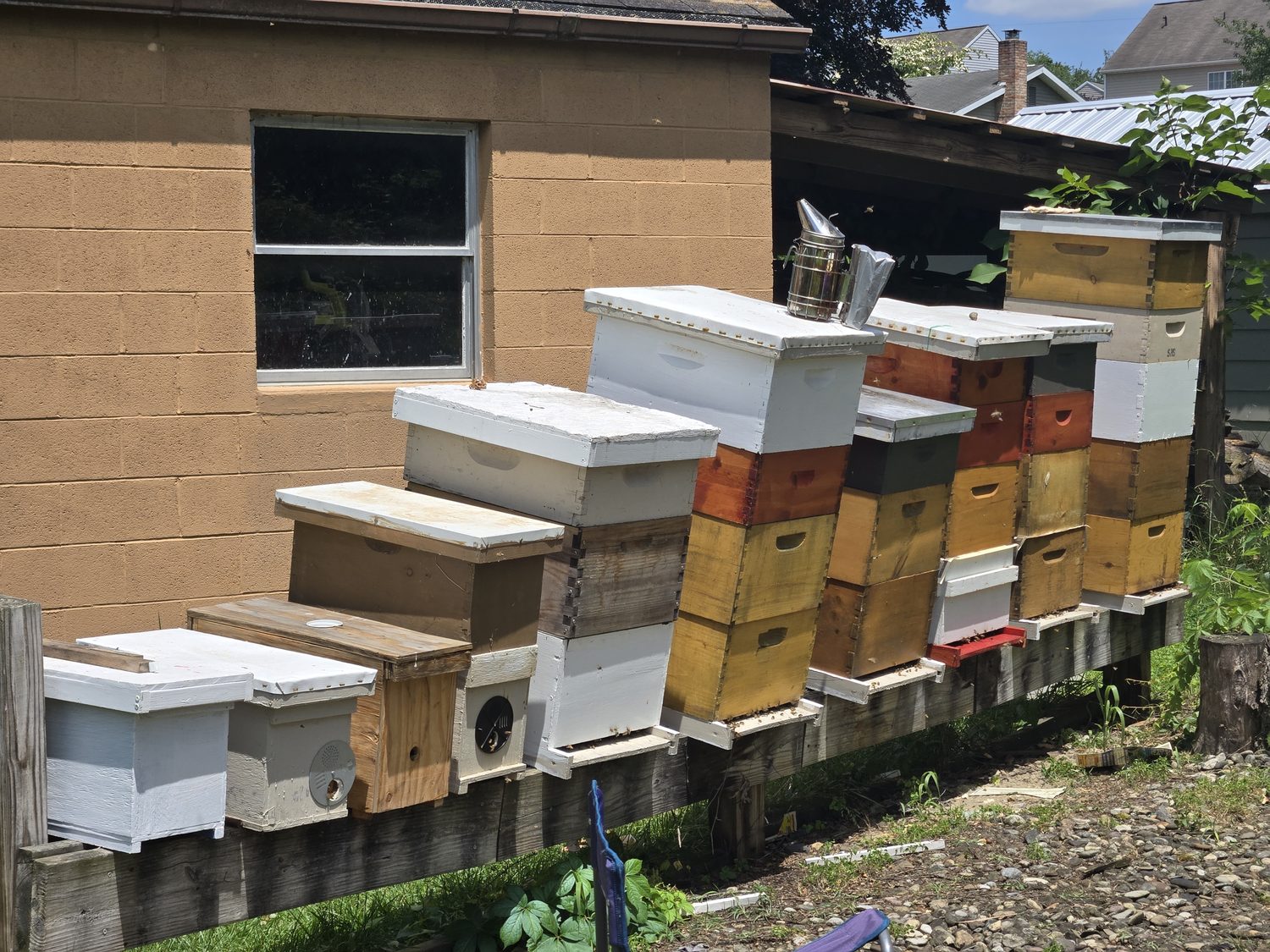
Every colony we collect goes to one of our apiaries in Hummelstown, where they're given a new hive and time to settle in. We don't sell them, we don't kill them, and we don't pass them off to anyone else. They become part of our operation and keep doing what they're meant to do — pollinate, grow, and make honey.
Why not just exterminate them?
Honeybees are pollinators we genuinely can't afford to lose, and exterminating a colony inside a wall creates a bigger problem than it solves. Dead bees and abandoned honeycomb attract ants, mice, wax moths, and other pests, and untreated honey can leak through drywall for months. Live removal is the cleaner long-term solution for both the homeowner and the bees.
Will you fix the wall or structure after removal?
We're beekeepers, not contractors — we don't carry a construction license, so we can't handle drywall, siding, or roofing repairs. We always seal the cavity and clean up our work area before we leave, but any structural repair needs to be arranged separately by the homeowner.
Can I just remove the bees myself?
We don't recommend it. A wall colony usually contains thousands of bees plus pounds of honey-loaded comb, and disturbing them without the right gear and experience is a fast way to get badly stung, damage your home, or kill the colony. If you're set on doing it yourself, please call us first — we're happy to talk through what you're getting into.
What if I can't afford the removal cost?
Talk to us. We understand the current economy is difficult, and we work with homeowners across a wide range of budgets, and we'd rather find a way to help than turn anyone away. If a job isn't feasible at our normal pricing, we'll be honest about it and try to point you toward another option.
Do you handle carpenter bees?
No — carpenter bees bore into wood and need chemical treatment, not relocation. We send those calls to our trusted partner Lawns Plants & Pests LLC. Not sure if you have carpenter bees or honeybees? Send us a photo and we'll identify them before routing you.
Areas We Serve
Based in Hummelstown, we cover live honeybee removals across the Harrisburg metro — Hummelstown, Hershey, Harrisburg, Mechanicsburg, Palmyra, Middletown, Elizabethtown, Linglestown, Colonial Park, Camp Hill, and Lancaster, plus Lemoyne, Wormleysburg, New Cumberland, Steelton, Lebanon, and Grantville.
Outside the Harrisburg area? We can't make a long drive, but the bees can still be saved — the Pennsylvania State Beekeepers Association keeps a statewide swarm-and-removal list that can connect you with a beekeeper near you.